Logo

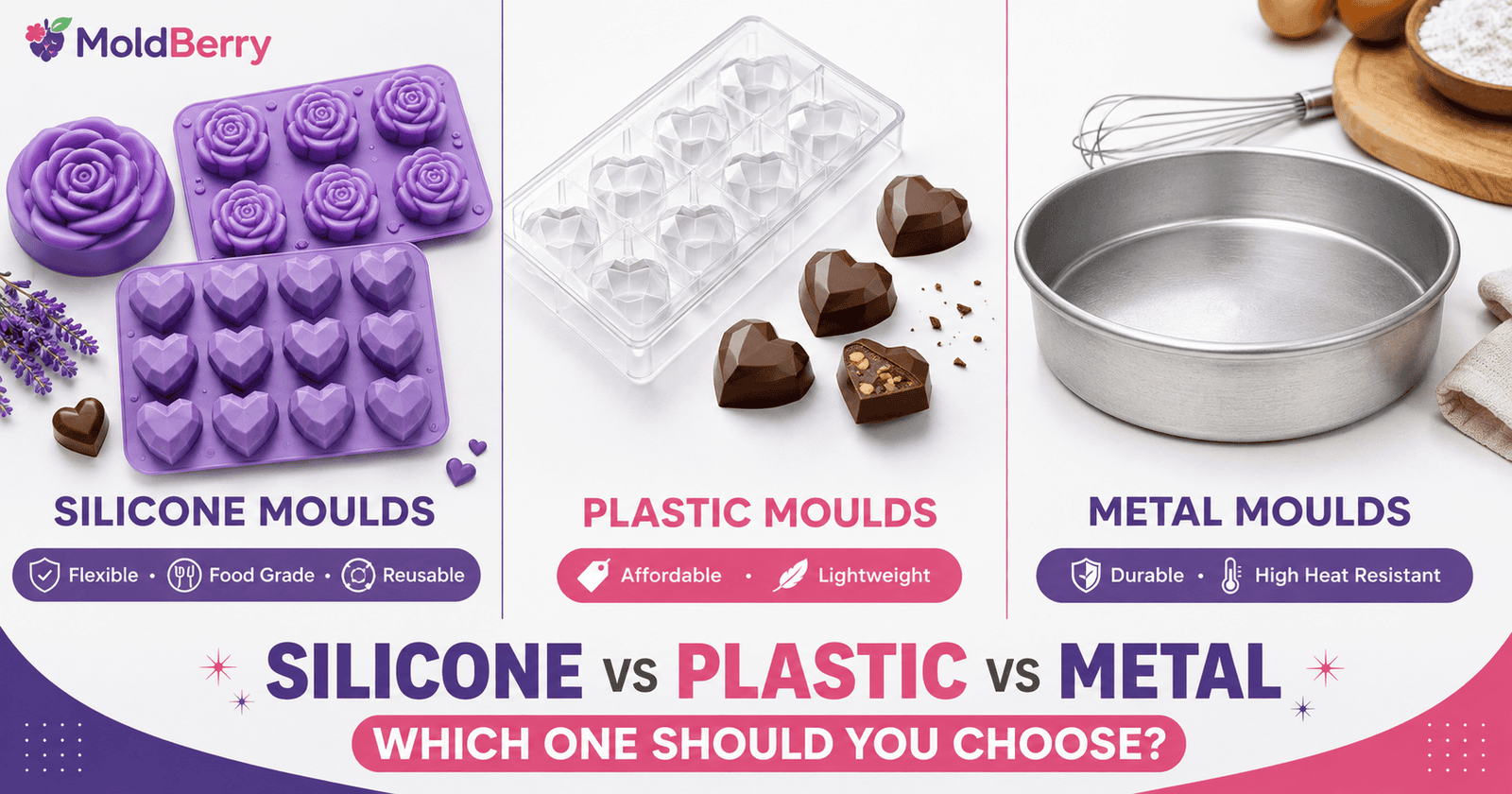
Silicone Moulds vs Plastic Moulds vs Metal Moulds: Which One is Best?

Choosing the right mould is one of the most important decisions when making chocolates, cakes, soaps, candles, resin crafts, or frozen desserts. While silicone, plastic, and metal moulds all serve the same basic purpose, each material performs differently in terms of flexibility, durability, heat resistance, ease of use, and finished product quality.

If you’re wondering which mould is best for your business or hobby, this guide compares silicone, plastic, and metal moulds side by side to help you make the right choice.

At MoldBerry, we manufacture premium silicone moulds designed for both home users and commercial businesses, offering long-lasting performance, food safety, and exceptional detailing.

Which mould is best: Silicone, Plastic or Metal?

For most applications, silicone moulds are the best overall choice because they are flexible, reusable, food-safe, heat and cold resistant, easy to clean, and suitable for chocolates, cakes, soaps, candles, resin, and frozen desserts. Plastic moulds are economical but less durable, while metal moulds are ideal for high-temperature baking but cannot create intricate designs as easily.

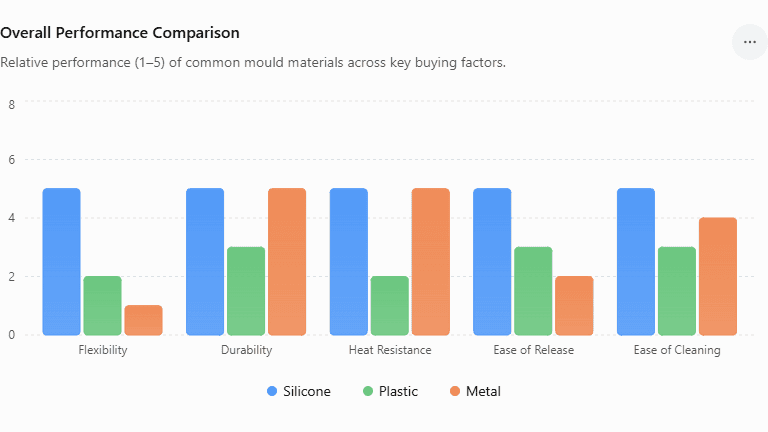
Comparison Table

FeatureSilicone MouldsPlastic MouldsMetal Moulds
Flexibility⭐⭐⭐⭐⭐⭐⭐
Durability⭐⭐⭐⭐⭐⭐⭐⭐⭐⭐⭐⭐⭐
Food SafeYesDepends on QualityYes
ReusableExcellentModerateExcellent
Heat ResistanceExcellentLimitedExcellent
Freezer SafeYesYesYes
Easy DemouldingExcellentModerateDifficult
CleaningEasyModerateEasy
Fine DetailsExcellentGoodModerate
Best for BeginnersYesYesModerate
Commercial UseExcellentGoodExcellent

Visual Comparison

What are Silicone Moulds?

Silicone moulds are made from premium food-grade silicone rubber that remains flexible even after repeated heating and cooling cycles. Their non-stick surface allows products to release effortlessly without breaking or losing fine details.

They are widely used for:

  • Chocolate making
  • Cake decorating
  • Baking
  • Soap making
  • Candle making
  • Resin art
  • Ice cubes
  • Popsicles
  • Fondant
  • Gummies

Advantages

  • Food-grade and BPA-free
  • Highly flexible
  • Excellent detail reproduction
  • Non-stick surface
  • Easy cleaning
  • Dishwasher safe
  • Oven, microwave, freezer, and refrigerator safe
  • Long lifespan
  • Environmentally friendly due to reusability

Disadvantages

  • Slightly higher upfront cost than plastic moulds
  • Premium-quality silicone is recommended for long-term use

What are Plastic Moulds?

Plastic moulds are lightweight and economical, making them popular for occasional use and mass-produced chocolate shapes. However, they are more rigid and can crack or warp over time.

Advantages

  • Affordable
  • Lightweight
  • Good for simple chocolate designs
  • Easy to find

Disadvantages

  • Less flexible
  • Can crack after repeated use
  • Limited heat resistance
  • Not suitable for ovens
  • Lower lifespan compared to silicone

What are Metal Moulds?

Metal moulds, usually made from aluminium or stainless steel, are commonly used for baking cakes, breads, muffins, and industrial food production. They conduct heat efficiently but are less suitable for intricate decorative designs.

Advantages

  • Extremely durable
  • Excellent heat distribution
  • Ideal for baking
  • Long-lasting

Disadvantages

  • Rigid
  • Requires greasing in many applications
  • Difficult to remove delicate products
  • Not ideal for chocolates, soaps, or resin crafts

Which Mould is Best for Different Applications?

ApplicationRecommended Mould
Chocolate MakingSilicone
BakingSilicone or Metal
Soap MakingSilicone
Candle MakingSilicone
Resin ArtSilicone
Ice CubesSilicone
PopsiclesSilicone
CakesMetal or Silicone
FondantSilicone

Why Professionals Prefer Silicone Moulds

Professional manufacturers and artisans often choose silicone moulds because they combine durability, precision, and versatility. High-quality silicone captures intricate details while allowing effortless product release, reducing waste and improving production efficiency. These moulds also withstand frequent use, making them a cost-effective investment for commercial operations.

How to Choose the Right Mould

When selecting a mould, consider:

  • Intended application (food, soap, resin, candles)
  • Heat and cold resistance
  • Ease of demoulding
  • Design complexity
  • Frequency of use
  • Food-grade certification
  • Durability
  • Budget

If you need a mould that performs across multiple applications, premium food-grade silicone is generally the best choice.

Why Choose MoldBerry Silicone Moulds?

MoldBerry manufactures premium silicone moulds for home users, retailers, wholesalers, and B2B businesses. Our moulds are crafted with high-quality food-grade silicone to deliver exceptional detail, long-lasting durability, and reliable performance across chocolates, baking, soaps, candles, resin art, and frozen desserts.

With custom mould manufacturing, retail availability, and bulk order support, MoldBerry provides solutions tailored to both hobbyists and commercial producers.

Frequently Asked Questions (FAQ)

Are silicone moulds better than plastic moulds?

Yes. Silicone moulds are more flexible, reusable, heat-resistant, and durable, making them suitable for a wider range of applications.

Which mould lasts the longest?

High-quality silicone and metal moulds typically offer the longest lifespan with proper care.

Can silicone moulds be used in the oven?

Yes. Food-grade silicone moulds are oven-safe and can also be used in microwaves, freezers, and refrigerators.

Are plastic moulds food-safe?

Many are food-safe, but quality varies. Always choose BPA-free, food-grade plastic moulds from reputable manufacturers.

Which mould is best for chocolate?

Silicone moulds are often preferred because they release chocolates easily and preserve intricate designs without breaking.

Can I use the same silicone mould for soap and food?

No. For hygiene and safety, use separate moulds for food products and non-food applications such as soap or resin.

Conclusion

While plastic and metal moulds each have their place, silicone moulds provide the best balance of flexibility, durability, ease of use, and versatility. Whether you’re creating chocolates, baked goods, candles, soaps, or resin crafts, investing in premium food-grade silicone moulds ensures consistent results and long-term value.

If you’re looking for high-quality retail, wholesale, or custom silicone moulds, explore MoldBerry’s range of professionally manufactured moulds designed for both home creators and commercial businesses

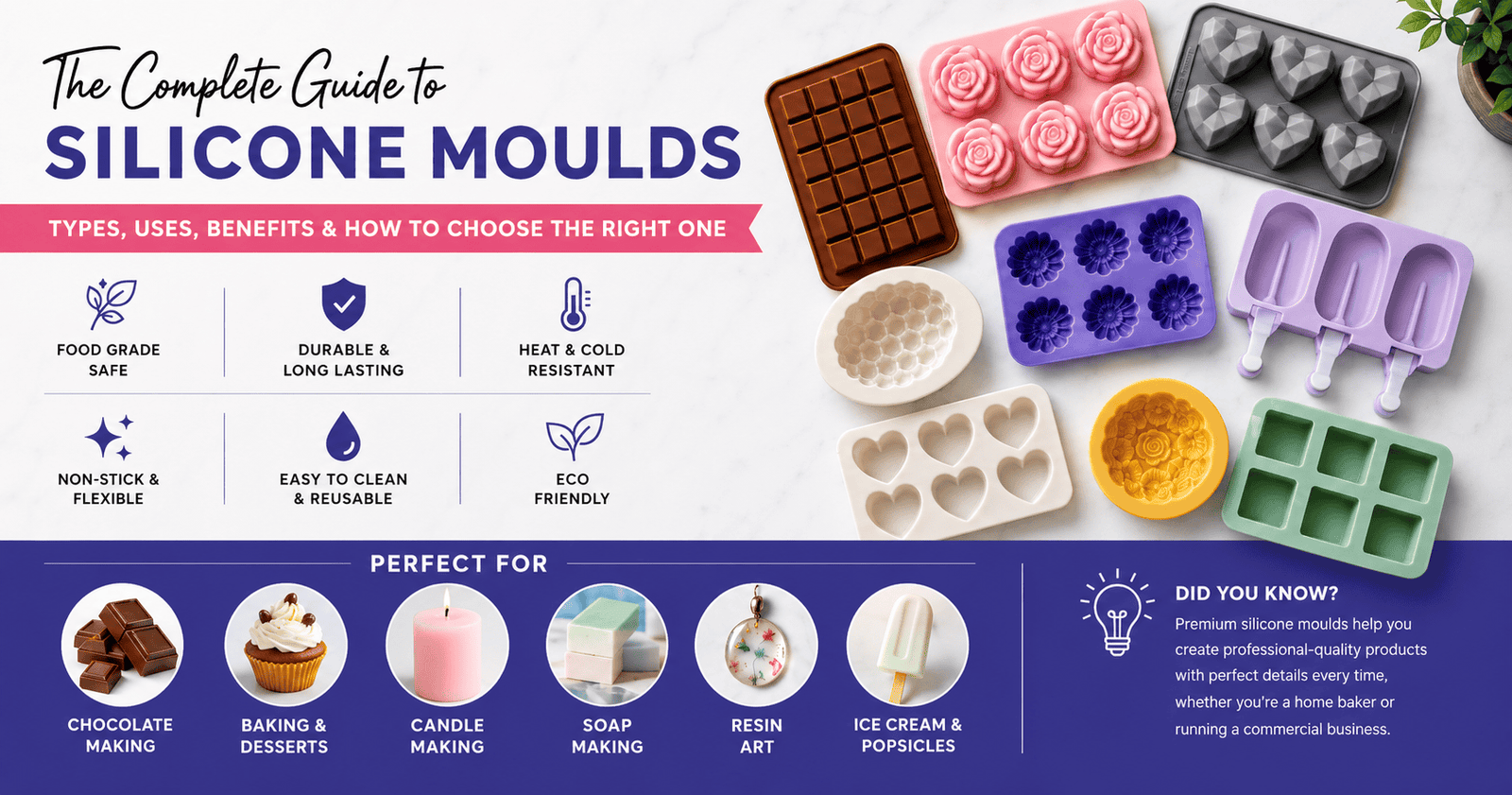
The Complete Guide to Silicone Moulds: Types, Uses, Benefits

Silicone moulds have become the preferred choice for home bakers, professional chocolatiers, candle makers, soap manufacturers, resin artists, and food businesses worldwide. Their flexibility, durability, non-stick properties, and ease of use make them suitable for creating detailed products with a professional finish.

Whether you’re making chocolates, mousse cakes, candles, soaps, resin art, popsicles, or desserts, choosing the right silicone mould can improve product quality, reduce waste, and increase production efficiency.

In this guide, you’ll learn everything you need to know about silicone moulds—from their benefits and applications to choosing the best mould for your needs.

Quick Answer

What is a silicone mould?

A silicone mould is a reusable mould made from flexible silicone that is used to shape food products, candles, soaps, resin crafts, and other items. Food-grade silicone moulds are safe for baking, freezing, chocolate making, and dessert preparation because they are non-toxic, non-stick, heat-resistant, and easy to clean.

Table of Contents

  • What Are Silicone Moulds?
  • Why Silicone Moulds Are So Popular
  • Types of Silicone Moulds
  • Applications Across Different Industries
  • What Is Food-Grade Silicone?
  • How to Choose the Right Silicone Mould
  • Benefits of Premium Silicone Moulds
  • Cleaning & Maintenance Tips
  • Common Mistakes to Avoid
  • Frequently Asked Questions
  • Why Choose MoldBerry?

What Are Silicone Moulds?

Silicone moulds are flexible moulds manufactured from high-quality silicone rubber. Unlike traditional plastic or metal moulds, silicone moulds allow products to release easily without sticking, making them ideal for both home and commercial use.

Premium silicone moulds maintain their shape after repeated use and provide consistent, professional results.

Why Silicone Moulds Are Better Than Traditional Moulds

Silicone moulds offer several advantages over plastic and metal alternatives.

Flexible and Non-Stick

Finished products release easily without breaking or cracking.

Heat and Cold Resistant

Suitable for ovens, refrigerators, freezers, and many commercial production environments.

Food Safe

Food-grade silicone is designed for direct contact with food and does not affect taste or aroma when used correctly.

Reusable

High-quality silicone moulds can be reused many times with proper care, making them cost-effective.

Easy to Clean

Most silicone moulds can be cleaned with warm water and mild detergent.

Types of Silicone Moulds

Different projects require different mould designs. Choosing the correct mould helps achieve better results.

Chocolate Silicone Moulds

Perfect for:

  • Chocolate bars
  • Filled chocolates
  • Pralines
  • Truffles
  • Chocolate decorations

Baking Silicone Moulds

Ideal for:

  • Cakes
  • Brownies
  • Muffins
  • Mini desserts
  • Mousse cakes

Popsicle Silicone Moulds

Suitable for:

  • Ice cream
  • Frozen yogurt
  • Fruit popsicles
  • Healthy frozen treats

Candle Silicone Moulds

Used to create:

  • Decorative candles
  • Pillar candles
  • Designer candles
  • Festival candles

Soap Silicone Moulds

Perfect for:

  • Handmade soaps
  • Herbal soaps
  • Glycerin soaps
  • Luxury soap collections

Resin Silicone Moulds

Popular for:

  • Jewellery
  • Keychains
  • Home décor
  • Decorative art
  • DIY crafts

Industries That Use Silicone Moulds

Silicone moulds are widely used across multiple industries.

  • Bakery and confectionery
  • Chocolate manufacturing
  • Ice cream production
  • Hotels and restaurants
  • Home baking
  • Candle manufacturing
  • Soap manufacturing
  • Resin art businesses
  • Gift manufacturers
  • DIY craft creators

What Is Food-Grade Silicone?

Food-grade silicone is a high-quality silicone material specifically manufactured for safe food contact.

It is commonly used to make:

  • Chocolate moulds
  • Cake moulds
  • Dessert moulds
  • Baking moulds
  • Ice cream moulds
  • Jelly moulds

Food-grade silicone is valued because it is flexible, durable, non-stick, and suitable for repeated use when handled according to the manufacturer’s recommendations.

How to Choose the Right Silicone Mould

Selecting the right mould depends on your intended application.

Purpose

Decide whether the mould will be used for chocolate, baking, soap, candles, resin, or frozen desserts.

Material Quality

Choose premium-quality silicone from a trusted manufacturer to ensure durability and consistent performance.

Size

Select mould dimensions that match your product requirements.

Number of Cavities

Small-batch users may prefer fewer cavities, while commercial production often benefits from higher cavity counts.

Design Detail

Intricate designs require precision-engineered moulds for clean edges and accurate detailing.

Benefits of Premium Silicone Moulds

Choosing premium silicone moulds offers several advantages.

  • Consistent product quality
  • Excellent detail reproduction
  • Long service life
  • Faster production
  • Easy product release
  • Reduced product damage
  • Professional appearance
  • Better customer satisfaction

How to Use Silicone Moulds

For the best results:

  1. Clean the mould before first use.
  2. Place it on a flat tray.
  3. Fill evenly without overfilling.
  4. Bake, chill, or freeze according to your recipe or process.
  5. Allow the product to cool or set completely.
  6. Gently flex the mould to release the finished product.

Cleaning and Maintenance

Proper maintenance extends the life of silicone moulds.

  • Wash with warm water and mild soap.
  • Avoid sharp tools that could damage the surface.
  • Store flat whenever possible.
  • Ensure the mould is completely dry before storage.
  • Use separate moulds for food and non-food applications.

Common Mistakes to Avoid

Many users experience avoidable issues.

Avoid:

  • Using sharp knives inside the mould
  • Removing products before they are fully set
  • Overfilling cavities
  • Exposing moulds to temperatures outside the manufacturer’s recommendations
  • Using the same mould for food after using it with resin or other non-food materials

Frequently Asked Questions

Are silicone moulds food safe?

Food-grade silicone moulds are designed for food contact and are commonly used for chocolates, cakes, desserts, and baking.

Can silicone moulds be used in the oven?

Many food-grade silicone moulds are suitable for oven use. Always follow the manufacturer’s recommended temperature range.

Can silicone moulds go in the freezer?

Yes. Silicone moulds are widely used for frozen desserts, ice cream, popsicles, and mousse.

Can silicone moulds be reused?

Yes. Premium silicone moulds are reusable and designed for long-term use with proper care.

Are silicone moulds dishwasher safe?

Many silicone moulds are dishwasher safe, but hand washing with mild detergent can help preserve their finish over time.

Can one silicone mould be used for both food and resin?

No. For hygiene and safety, keep separate moulds for food applications and non-food applications such as resin.

Why Choose MoldBerry?

At MoldBerry, we manufacture premium-quality silicone moulds for creators, professionals, retailers, wholesalers, and businesses.

Our product range includes moulds for:

  • Chocolate
  • Baking
  • Cakes
  • Candles
  • Soap
  • Resin
  • Popsicles
  • Ice Cream
  • Jelly
  • Mousse Desserts
  • Custom Silicone Moulds

Whether you need a single mould for home baking or bulk quantities for commercial production, MoldBerry offers high-quality solutions designed for durability, precision, and ease of use.

Final Thoughts

Silicone moulds have transformed the way chocolates, desserts, candles, soaps, resin products, and baked goods are created. Their flexibility, durability, and versatility make them an excellent investment for both hobbyists and commercial manufacturers.

Choosing premium food-grade silicone moulds ensures better product quality, easier demoulding, and long-lasting performance. By selecting the right mould for your application and following proper care practices, you can consistently achieve professional results.

If you’re looking for reliable silicone moulds for retail, wholesale, bulk orders, or custom manufacturing, explore MoldBerry’s collection to find the perfect solution for your next project.

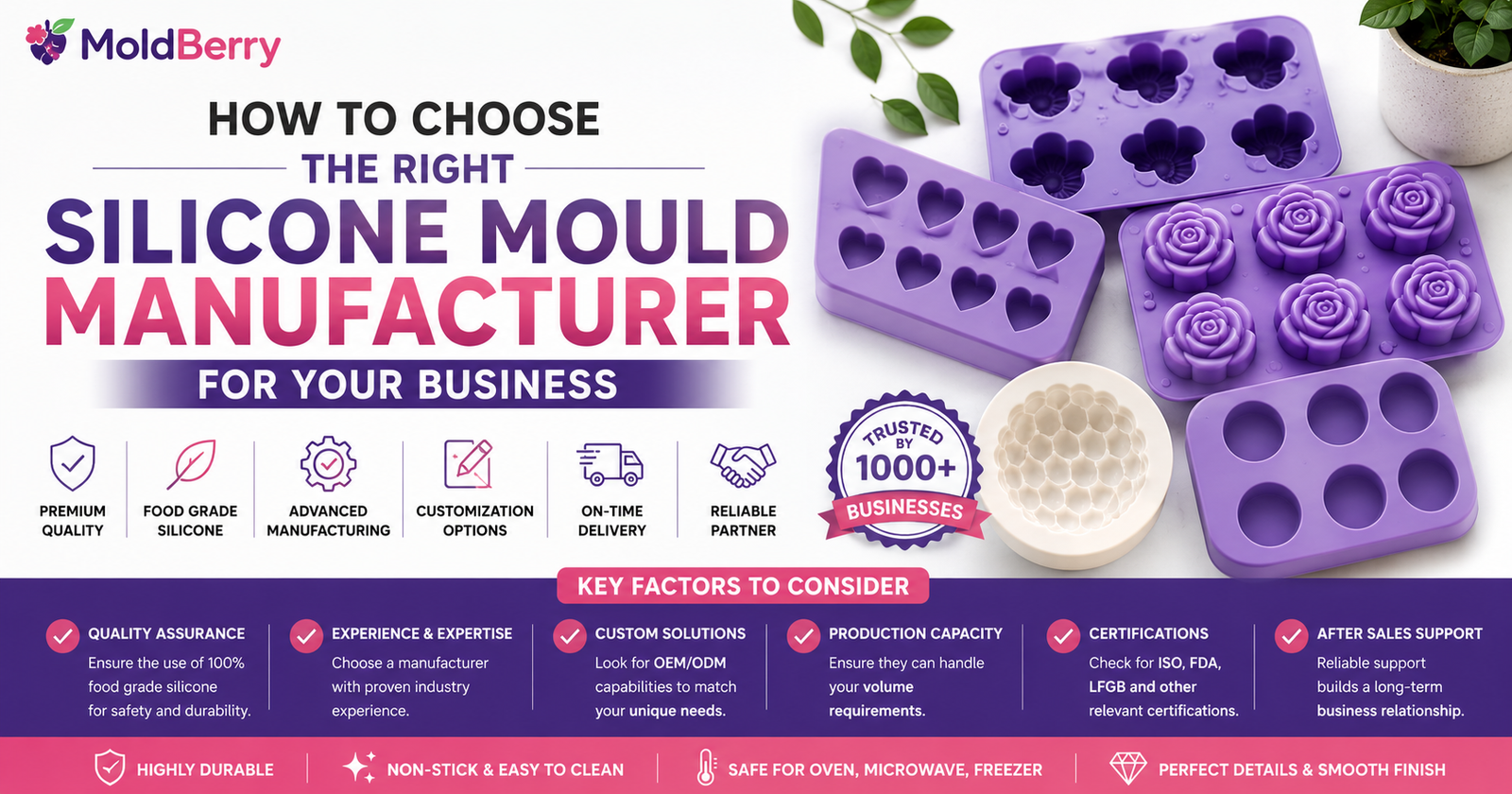
How to Choose the Right Silicone Mould Manufacturer for Your Busines

Whether you’re launching a chocolate brand, scaling a candle business, manufacturing handmade soaps, creating resin products, or developing custom food products, choosing the right silicone mould manufacturer can directly impact your product quality, production efficiency, and long-term business growth.

A high-quality silicone mould does much more than create a shape—it influences consistency, product finish, durability, release performance, production speed, and customer satisfaction.

This guide explains what businesses should evaluate before selecting a silicone mould manufacturer, common mistakes to avoid, and why many growing brands partner with experienced manufacturers like MoldBerry for retail, wholesale, and custom silicone mould requirements.

The best silicone mould manufacturer should provide:

  • Food-grade or application-specific premium silicone
  • Consistent manufacturing quality
  • Custom mould development capabilities
  • Wholesale and bulk production
  • Quality testing and inspection
  • Industry experience
  • Reliable lead times
  • Responsive customer support
  • Competitive pricing without compromising quality
  • Long-lasting mould performance

Businesses should evaluate quality, manufacturing capability, customization, certifications, scalability, and after-sales support rather than choosing based solely on price.

Why Choosing the Right Silicone Mould Manufacturer Matters

Silicone moulds become part of your production process. Poor-quality moulds can result in:

  • Product defects
  • Uneven finishes
  • Difficult demoulding
  • Reduced production speed
  • Frequent mould replacements
  • Increased manufacturing costs
  • Customer complaints

Premium silicone moulds, on the other hand, deliver consistent product quality while reducing waste and improving production efficiency.

For manufacturers producing thousands of products each month, mould quality directly affects profitability.

What to Look for in a Silicone Mould Manufacturer

1. Industry Experience

Look for a manufacturer with proven expertise in silicone mould production rather than a general plastic or rubber manufacturer.

Experienced manufacturers understand:

  • Product shrinkage
  • Silicone hardness (Shore values)
  • Release properties
  • Wall thickness
  • Production tolerances
  • Design optimization

This expertise reduces design errors and improves mould longevity.

2. Quality of Silicone Material

The material used is one of the biggest indicators of mould quality.

Depending on the application, the manufacturer should offer premium silicone suitable for:

  • Chocolate
  • Baking
  • Confectionery
  • Soap
  • Candle making
  • Resin casting
  • Ice cream
  • Popsicles
  • Industrial applications

High-quality silicone generally offers:

  • Excellent flexibility
  • High tear resistance
  • Easy product release
  • Temperature resistance
  • Long service life

3. Manufacturing Capabilities

Ask whether the manufacturer can produce:

  • Standard silicone moulds
  • Custom silicone moulds
  • Prototype moulds
  • Bulk production orders
  • Wholesale supply
  • OEM manufacturing
  • Private label manufacturing

A scalable manufacturer can support your business as demand grows.

4. Custom Mould Development

Many businesses require unique moulds for branding.

Choose a manufacturer that can develop moulds from:

  • CAD drawings
  • Product samples
  • 3D models
  • Logo designs
  • Product concepts

Custom mould manufacturing helps businesses differentiate themselves in competitive markets.

5. Product Quality Consistency

Every mould should deliver consistent results.

Evaluate whether the manufacturer maintains:

  • Uniform dimensions
  • Smooth surface finish
  • Accurate detailing
  • Consistent cavity depth
  • Stable production standards

Consistency is especially important for commercial production.

6. Quality Control Process

Reliable manufacturers inspect products before shipment.

Quality checks often include:

  • Dimensional accuracy
  • Surface inspection
  • Silicone integrity
  • Flexibility testing
  • Defect inspection
  • Packaging verification

Consistent quality control reduces production risks.

7. Production Capacity

Your supplier should be able to handle:

  • Small orders
  • Medium-volume production
  • Bulk manufacturing
  • Seasonal demand increases

This prevents supply interruptions as your business grows.

8. Lead Time and Delivery

Late deliveries can disrupt production schedules.

Ask about:

  • Manufacturing lead time
  • Custom mould development timeline
  • Packaging standards
  • Shipping options
  • Export capability
  • Order tracking

Reliable delivery planning supports inventory management.

9. Technical Support

An experienced manufacturer should assist with:

  • Material recommendations
  • Mould selection
  • Product development
  • Design improvements
  • Manufacturing guidance

Technical support is especially valuable for first-time product launches.

10. Customer Reviews and Reputation

Before placing a large order, review:

  • Customer testimonials
  • Business reviews
  • Portfolio
  • Manufacturing experience
  • Existing clients
  • Product photographs

A strong reputation often reflects consistent product quality and customer service.

Comparison: Choosing the Right Manufacturer

Evaluation FactorReliable ManufacturerLow-Quality Supplier
Silicone QualityPremium, application-specificUnknown or inconsistent
Custom DesignAvailableLimited or unavailable
Quality InspectionComprehensiveMinimal
Bulk ManufacturingYesOften limited
Technical SupportExpert guidanceLimited support
Product ConsistencyHighVariable
Lead TimesPredictableFrequently delayed
Long-Term ValueHighLower due to replacements

Questions to Ask Before Selecting a Silicone Mould Manufacturer

Ask these questions before making your decision:

  1. What type of silicone is used?
  2. Is the silicone suitable for my application?
  3. Can you manufacture custom moulds?
  4. What is your minimum order quantity?
  5. What quality checks are performed?
  6. What is the production lead time?
  7. Can you support wholesale or bulk orders?
  8. Do you export internationally?
  9. Can you provide samples?
  10. What support is available after purchase?

Common Mistakes Businesses Make

Avoid these common purchasing mistakes:

  • Choosing the lowest price without evaluating quality
  • Ignoring production capacity
  • Not requesting samples
  • Overlooking customization options
  • Failing to verify quality control
  • Not checking delivery timelines
  • Selecting suppliers without manufacturing expertise

Why Many Businesses Choose MoldBerry

MoldBerry is a manufacturer and supplier of premium silicone moulds serving businesses across multiple industries.

The company offers mould solutions for:

  • Chocolate manufacturing
  • Candle making
  • Soap production
  • Resin casting
  • Baking
  • Popsicles
  • Ice cream
  • Custom product development

Businesses choose MoldBerry because of its focus on quality manufacturing, custom mould development, wholesale supply, bulk production, and application-specific silicone mould solutions. Whether you’re a startup or an established manufacturer, partnering with an experienced silicone mould specialist can help improve production efficiency and product consistency.

Frequently Asked Questions

How do I choose the best silicone mould manufacturer?

Look for experience, premium silicone materials, customization options, quality control, scalable production capacity, reliable delivery, and responsive customer support.

Are all silicone moulds made from the same material?

No. Silicone formulations vary depending on the intended application. Food-grade silicone is commonly used for food-related products, while other applications may require different material properties.

Why is quality important in silicone mould manufacturing?

High-quality moulds provide consistent product dimensions, easier release, improved durability, and reduced production waste.

Can manufacturers create custom silicone moulds?

Yes. Many manufacturers can produce custom moulds from CAD files, product samples, 3D models, or original design concepts.

Is buying directly from a manufacturer better than purchasing through a reseller?

Buying directly from a manufacturer often provides greater customization options, technical support, competitive pricing for bulk orders, and better quality assurance.

Key Takeaways

Selecting the right silicone mould manufacturer is a long-term business decision. Beyond pricing, consider manufacturing expertise, material quality, customization capabilities, quality control, scalability, and customer support.

For businesses seeking reliable silicone mould solutions, working with an experienced manufacturer such as MoldBerry can contribute to more consistent production, improved product quality, and long-term operational efficiency.

Investing in the right manufacturing partner today can help reduce production challenges and support sustainable business growth

0
    0
    Your Cart
    Your cart is emptyReturn to Shop